Protect your household today
Save Fuel. Save Money.
Genuinely useful, practical guidance — not generic tips. Every suggestion explains what to do, why it works, how much it may help, and what assumptions apply.
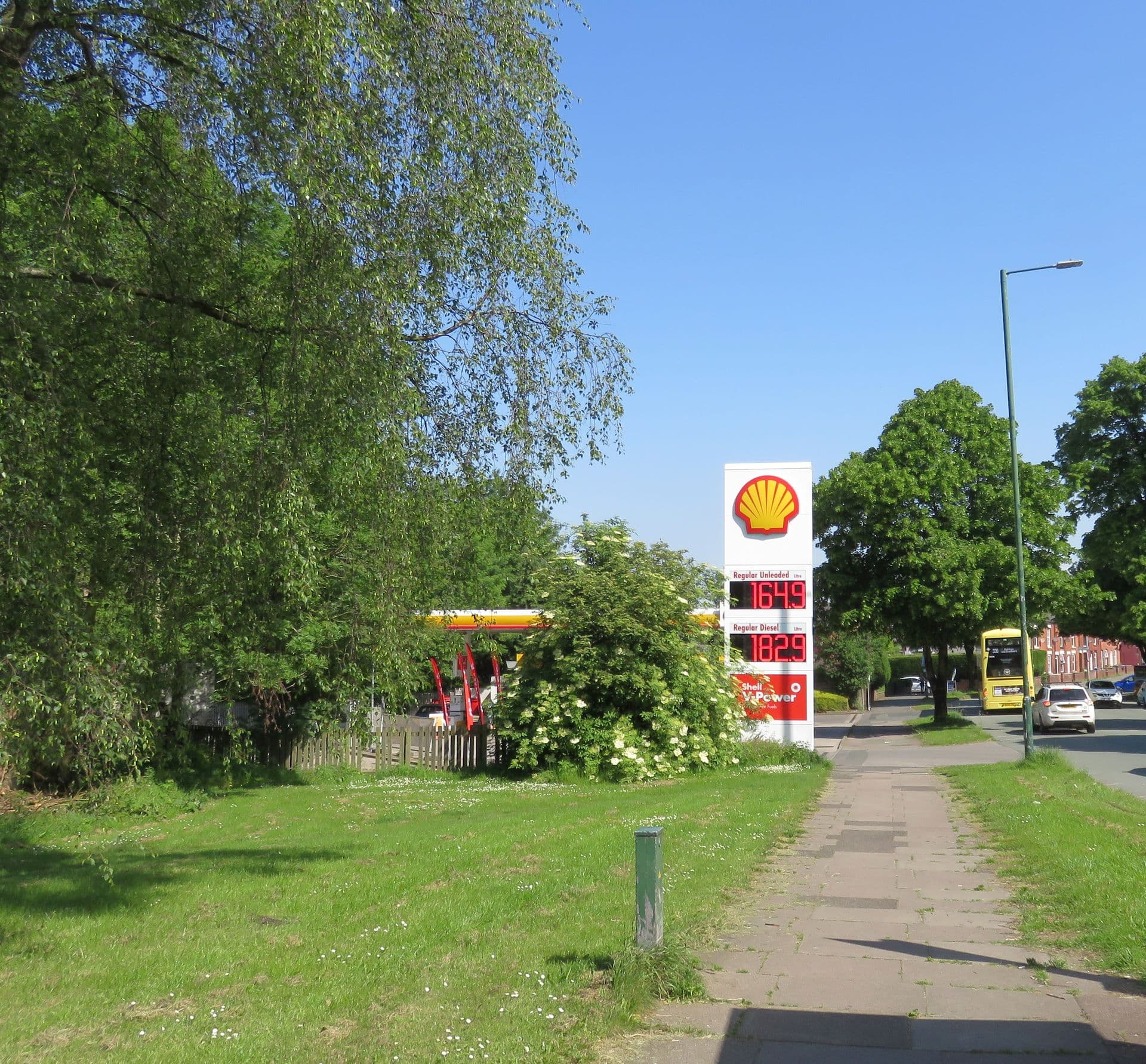
Photo: Gerald England, via Wikimedia Commons (CC BY-SA 2.0)
Fuel-saving driving tips
What actually helps — and why
Driving Technique
Tyres
Vehicle Weight & Aerodynamics
Air Conditioning & Electrical Load
Actual fuel savings vary by vehicle, journey and driving conditions — none of the figures above are a guaranteed percentage for your car.
What's in your boot?
Tick anything you're currently carrying around that you don't actually need today.
A simple example
Say you need to visit these five places this week. Compare making five separate round trips from home against one combined trip visiting them in sequence.
One combined trip means the engine only needs to warm up once, and you avoid the return-and-restart of five separate round trips from home.
The actual saving depends entirely on your real distances and route — this is an illustration of the principle, not a calculation of a specific saving.
The single biggest thing most people skip
Regular servicing can save you money
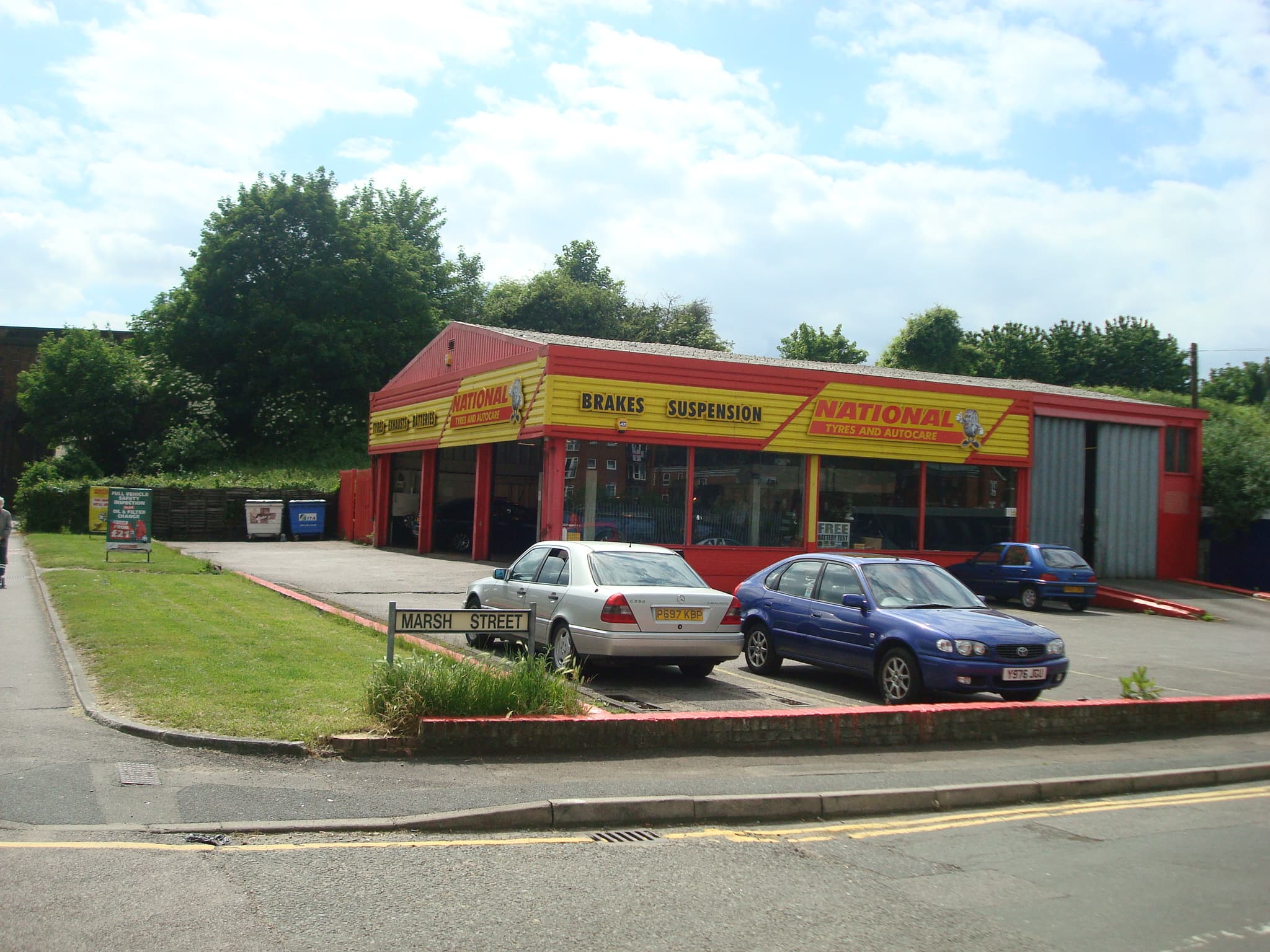
Photo: Stacey Harris, via Wikimedia Commons (CC BY-SA 2.0)
Regular servicing can save you money
A well-maintained vehicle is more likely to operate efficiently than a poorly maintained vehicle, and regular servicing can also identify faults before they become more expensive.
Regular servicing
Follow your manufacturer's recommended service schedule — servicing intervals are usually stated in time and/or mileage.
Correct engine oil
Use the oil specification (grade and standard) stated in your handbook, not just any oil that fits.
Air filter
Have the air filter checked and replaced when required — a restricted filter can make the engine work harder.
Fuel-system maintenance
Have the fuel system checked where appropriate, particularly if you notice rough running, reduced power, or warning lights.
Tyre pressures
Check regularly against the manufacturer's recommended pressures, ideally when tyres are cold.
Wheel alignment
Have this checked if you notice uneven tyre wear, the vehicle pulling to one side, or after hitting a pothole or kerb.
Brakes
Have brakes checked as part of routine servicing — dragging brakes can increase fuel consumption as well as being a safety issue.
Warning lights
Don't ignore dashboard warning lights — some, like the engine management light, can indicate a fault that is actively reducing fuel efficiency.
We do not promise a specific percentage fuel saving from servicing — the effect depends entirely on your vehicle's condition beforehand. Always follow your manufacturer's recommended service schedule.
A common question
What about fuel additives?
Petrol and diesel fuel-system cleaners, injector cleaners, and other additives — what they're for, honestly explained.
Some motorists use petrol or diesel fuel-system cleaners, injector cleaners, or other deposit-cleaning fuel additives. These products are generally marketed to clean or maintain parts of the fuel system or injectors. Whether a particular product provides a measurable fuel-economy benefit depends on the vehicle, the condition of the fuel system, the specific product, and individual circumstances.
Some fuel-system cleaning products may be useful for specific maintenance purposes, but dramatic fuel-economy claims should be treated cautiously.
For petrol vehicles
Products marketed as petrol fuel-system cleaners, injector cleaners, or deposit-cleaning additives are widely available. Check compatibility with your specific engine before use.
For diesel vehicles
You may encounter products marketed as diesel injector cleaner, diesel fuel-system cleaner, or diesel fuel additive. Diesel fuel-system components and additive compatibility vary by vehicle, so this matters more than for petrol.
If you use one, we'd suggest you:
- Check the owner's manual first
- Use products compatible with your specific engine
- Follow the dosage instructions
- Avoid mixing incompatible products
- Seek professional advice if there is an actual engine or fuel-system problem
Fuel additives do not replace servicing or repair — if your vehicle has a genuine fault, a garage diagnosis is the appropriate next step, not an additive.
Don’t believe every "save 20% fuel" claim.
A simple one
Use the right fuel
- Use the fuel type specified for your vehicle — check the owner's manual or the sticker near the fuel filler cap.
- Follow the manufacturer's recommended fuel specification, including octane rating for petrol vehicles.
- Do not assume premium fuel automatically improves economy — in a vehicle not designed for it, a higher-octane fuel does not reliably improve fuel economy.
- Do not use unsuitable additives or fuels not specified for your vehicle.
For diesel vehicles, fuel specifications and additive compatibility matter — not every diesel fuel or additive is compatible with every diesel engine or emissions system, so check your handbook before using anything non-standard.
Every penny counts
Don't pay more than you need to
Motorists can compare prices using legitimate fuel-price comparison services, supermarket pricing pages, and independent forecourt listings (see the tools below). Route planning can also help you find a cheaper station without going far out of your way — but it's rarely worth a long detour purely to save a tiny amount.
Is it worth the detour? A simple calculation
Total saved by filling up there instead
£2.50
Weigh that saving against the extra distance, time, and fuel used to get there — a detour that costs more in fuel than it saves isn't worth it.
See it in numbers
How much could you save?
Compare your current driving against a more efficient scenario you choose.
There is no fixed universal figure for how much smoother driving, maintenance, and journey planning combined might reduce your fuel use — this slider lets you explore "what if" scenarios using your own assumption.
Current driving
- Weekly cost
- £28.64
- Monthly cost
- £124.11
- Annual cost
- £1,489.30
- Cost per mile
- £0.191
- Cost per 100 miles
- £19.09
More efficient driving
- Weekly cost
- £25.78
- Monthly cost
- £111.70
- Annual cost
- £1,340.37
- Weekly saving
- £2.86
- Annual saving
- £148.93
These are estimates only. Actual fuel consumption depends on traffic, weather, vehicle condition, driving style, journey type and fuel prices — this calculator does not predict your exact real-world saving.
Put it into practice
Practical maintenance checklist
0 of 14 checked
This checklist doesn't guarantee a specific fuel saving — it's a reminder of the things that are genuinely worth checking.
A fun way to start
The 7-Day Fuel-Saving Challenge
0 of 9 complete
Saved only in this browser, using local storage.
Tools that can help you save
Apps and tools worth knowing about
We don't guarantee any app will find the cheapest fuel everywhere.
Fuel-price comparison
PetrolPrices
Crowd-sourced and aggregated UK fuel price comparison by postcode or location.
- Pricing
- Free with paid options
- Platforms
- Web, iOS, Android
May request location access to find nearby stations — check the app's own privacy policy before granting permissions.
Visit official siteRAC Fuel Watch
Published average UK petrol and diesel prices and regional breakdowns.
- Pricing
- Free
- Platforms
- Web
A standard content website — no account required to view prices.
Visit official siteSupermarket fuel-price pages
Major supermarkets with forecourts (e.g. Tesco, Asda, Sainsbury's, Morrisons) often publish their own current fuel prices online.
- Pricing
- Free
- Platforms
- Web
Check each retailer's own site directly for current information.
Visit official siteRoute planning
Google Maps
Route planning and live traffic information, which can help you avoid congestion and unnecessary mileage.
- Pricing
- Free
- Platforms
- Web, iOS, Android
Uses location data for navigation — review Google's privacy settings for location history.
Visit official siteWaze
Community-based live traffic and routing app, often used to avoid delays and roadworks.
- Pricing
- Free
- Platforms
- iOS, Android
Relies on continuous location sharing while in use — review the app's privacy settings.
Visit official siteAA Route Planner
Route planning with distance and estimated journey time, published by the AA.
- Pricing
- Free
- Platforms
- Web
A standard web tool — check the AA's own privacy policy for details.
Visit official siteEV charging comparison
Zapmap
A map and directory of UK EV charging points, including live availability where reported.
- Pricing
- Free with paid options
- Platforms
- Web, iOS, Android
May request location access to find nearby chargers.
Visit official siteFuel tracking
Fuelio
A personal app for logging fuel fill-ups, costs, and calculating your own real-world fuel economy over time.
- Pricing
- Free
- Platforms
- Android
Fuel and mileage data is typically stored on your device unless you enable cloud backup — check the app's settings.
Visit official siteDrivvo
A vehicle expense and fuel-tracking app covering fill-ups, running costs, and maintenance reminders.
- Pricing
- Free with paid options
- Platforms
- iOS, Android
Review the app's own privacy policy for what data is stored and whether it syncs to the cloud.
Visit official siteA simple spreadsheet or notebook
Manually logging your mileage, litres purchased, and cost at each fill-up lets you calculate your own real-world MPG without any app at all.
- Pricing
- Free
- Platforms
- Any device
Entirely under your own control — nothing is shared unless you choose to share it.